Sweeten Your Design Palette: Using Valentine's Day Candy Backgrounds
When you are working on a seasonal campaign, the background does more than just fill empty space; it sets the entire mood. For February projects, specifically those targeting the romantic and playful sides of the holiday, Valentine's Day Candy Backgrounds offer a distinct visual language. These assets move away from the traditional red hearts and roses, tapping instead into a sugary, colorful aesthetic that feels modern and energetic. If you are a designer, marketer, or small business owner, understanding how to leverage these specific textures can help you create projects that stand out in a crowded feed.
The Visual Appeal of a Candy-Infused Aesthetic
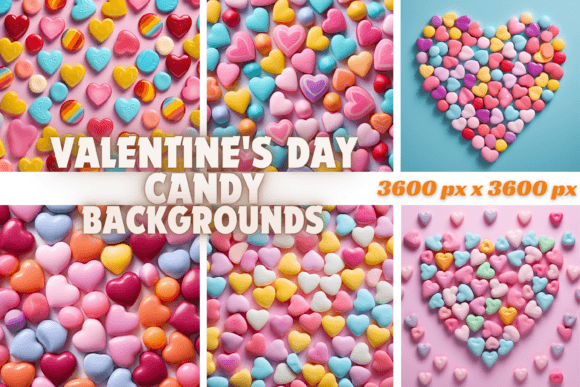
At first glance, a collection of Valentine's Day Candy Backgrounds might seem purely decorative, but there is a strong design strategy behind using confectionery themes. The visual characteristics typically involve high-saturation colors—think bubblegum pinks, electric reds, and soft whites—combined with organic, playful shapes. Unlike rigid geometric patterns, candy textures offer a sense of whimsy and softness. This style taps into nostalgia while remaining fresh, creating an atmosphere that is lighthearted and inviting. It’s a visual shorthand for "fun" and "sweetness," making it an excellent choice for brands that want to appear approachable and warm.
The personality of these backgrounds is undeniably playful, but with the right typography, it can also feel sophisticated. The key lies in the resolution and quality of the assets. High-definition candy textures provide depth, allowing text and foreground elements to pop without getting lost in the noise. Whether you are using a subtle confetti scatter or a dense arrangement of wrapped sweets, the goal is to create a visual hierarchy where the background supports the message rather than competing with it.
Strategic Applications for Modern Creators
The versatility of Valentine's Day Candy Backgrounds extends far beyond simple greeting cards. For entrepreneurs and content creators, these assets are powerful tools for visual branding during the Q1 season. Here is how different professionals can apply them effectively:
- Digital Marketing & Social Media: In a fast-scrolling environment, candy backgrounds act as a pattern interrupt. They are perfect for Instagram Stories, Facebook ads, and Pinterest pins. The bright colors and recognizable shapes immediately signal a sale or a special event, driving higher engagement rates for seasonal promotions.
- Print Design & Packaging: If you are a small business owner selling physical goods, these backgrounds can transform your packaging. Think of custom tissue paper, box inserts, or product labels. A candy-themed backdrop suggests that the product inside is a treat, even if the product isn't actually food. It influences the customer's perception of the unboxing experience.
- Editorial & Web Design: Bloggers and publishers can use these textures to break up long-form content. A subtle candy pattern can serve as a header image or a sidebar background, adding a seasonal touch to a website without requiring a complete site overhaul. It helps maintain brand consistency and seasonal relevance.
Pairing Typography with Playful Textures
One of the most common challenges with busy backgrounds is ensuring readability. When working with Valentine's Day Candy Backgrounds, your font choice becomes critical. Because candy textures are often intricate and colorful, you generally want to pair them with clean, legible typefaces.
A bold sans serif font is often a safe bet. The geometric simplicity of sans serifs provides a strong contrast to the organic, sugary shapes in the background, ensuring your headline text remains the focal point. If you are going for a more romantic vibe, a script font can work, provided it is a "modern script" with open counters and clear letterforms. Avoid overly ornate or thin handwritten fonts, as they can get visually tangled in the background details. The goal is to create a visual hierarchy where the text floats above the texture.
Technical Considerations and Best Practices
To get the most out of your Valentine's Day Candy Backgrounds, you need to treat them as professional design assets rather than just clip art. Here are some practical tips for implementation:
- Check the Resolution: Ensure the files are high-resolution (HD). Low-quality images will pixelate when printed, ruining the professional look of your brand identity. High-res files allow for flexibility, whether you are cropping in tight for a mobile screen or scaling up for a poster.
- Color Grading: Don't be afraid to adjust the hue and saturation of the background to match your specific brand palette. A candy background can be desaturated for a vintage look or color-shifted to match corporate brand guidelines while retaining the playful texture.
- Use Overlays: To ensure text legibility, consider using a semi-transparent overlay (like a soft white or dark gradient) between the background and your text. This "fogs" the background slightly, reducing visual clutter and helping your typography stand out.
Commercial Licensing and Project Fit
Before incorporating these assets into a client project or commercial product, always verify the licensing terms. Most premium design assets come with a license that covers both personal and commercial use, but it is your responsibility as a creative professional to ensure compliance. This is especially important if you are creating merchandise for sale or large-scale marketing campaigns.
Evaluating the fit of Valentine's Day Candy Backgrounds also involves understanding your audience. For a jewelry brand, the candy theme might be used to target a younger demographic or to promote "sweetheart" deals. For a bakery or confectioner, it is a direct visual correlation. For a tech startup, it might be used to soften their image during a February promotional event. By analyzing the context of your project, you can use these backgrounds to evoke specific emotions—nostalgia, excitement, and affection—turning a simple design element into a strategic asset for your brand.