8 Old Newsprint Seamless Backgrounds for Authentic Design
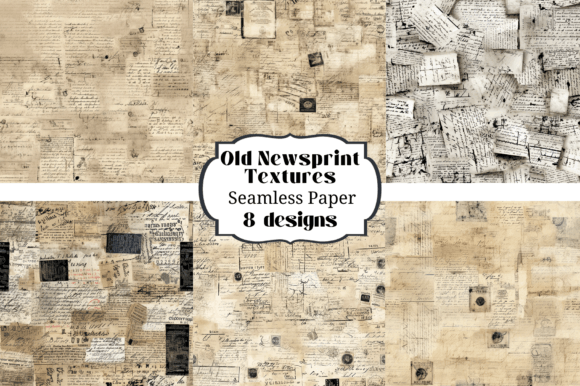
The search for authenticity in digital design often leads creators away from polished, sterile surfaces and toward textures that feel lived-in and real. The 8 Old Newsprint Seamless Backgrounds collection is a direct response to that need. It's not just a set of digital papers; it's a toolkit for adding instant history, character, and a tangible, tactile quality to any project. These backgrounds capture the specific personality of aged newsprint—the subtle yellowing, the faint, blurred impressions of old type, the uneven ink absorption, and the delicate, fibrous texture of paper that has been handled and aged over time.
Visually, this digital paper pack offers a masterclass in controlled imperfection. Each of the eight textures presents a unique variation on the theme, moving from cleaner, lightly aged surfaces to more heavily distressed and ink-stained versions. The seamless nature is critical, allowing you to tile them across any size canvas—from a small social media graphic to a full-scale poster—without a visible repeat line disrupting the illusion. The color palette is inherently warm and muted, dominated by creams, soft tans, and smudged grays. This isn't the bright white of modern paper; it's the organic, slightly uneven tone of something that has existed in the physical world. The personality is nostalgic, intellectual, and slightly gritty, making it a powerful tool for evoking specific moods and eras.
Where Old Newsprint Textures Shine: Practical Applications
The versatility of a well-executed texture pack like this is where its true value lies. For graphic designers and brand strategists, these backgrounds are a secret weapon for creating brand identities with depth. Imagine a boutique coffee roaster or a craft distillery using one of these newsprint textures as the foundational layer for their packaging design. It immediately communicates artisanal quality, tradition, and a hands-on approach. Paired with a sturdy serif font for headlines and a clean sans serif font for body copy, the texture grounds the entire layout, making the brand feel established and trustworthy.
In the realm of editorial design and web design, these backgrounds solve the problem of flat, digital-only aesthetics. A blog focused on history, literature, or vintage style can use a subtle newsprint texture as its website background to create an immersive reading experience. It adds visual interest without compromising the readability of the main content, provided the text is placed over a semi-opaque overlay or a solid color block derived from the texture's own palette. For social media graphics, the applications are immediate. An Instagram post for a bookshop, a podcast cover about 20th-century events, or a quote card for a thought leader in the humanities gains an instant layer of credibility and intellectual weight when set against this aged paper.
Beyond commercial use, the 8 Old Newsprint Seamless Backgrounds are a cornerstone for the personal craft and hobbyist community. This is where the product's description as perfect for scrapbooking, junk journals, collage, card making, and paper crafts truly comes to life. For the digital scrapbooker, these textures provide an authentic base layer that mimics the feel of real ephemera. A junk journal enthusiast can print these backgrounds to create pages that look and feel like they've been torn from an old book. The digital download nature, with 300 DPI PNG files, ensures that even when printed at a large scale for mixed-media art or custom stationery, the detail and grain remain crisp and professional. The absence of watermarks and the high resolution mean the final output is entirely yours to manipulate.
Integrating Texture into Your Creative Workflow
Choosing to use a texture like old newsprint is a deliberate design decision that influences more than just the background. It sets a tone for the entire visual hierarchy. When your base layer has this much character, your typography and primary imagery need to be chosen with care to ensure they don't get lost. A bold, modern display font can create a striking contrast against the vintage texture, making headlines pop. Conversely, a classic serif typeface can harmonize with the background, creating a seamless, period-appropriate look. The key is to test your font pairing directly on the texture. Does your chosen script font or handwritten font remain legible when placed over the busier, ink-stained areas of the paper? The seamless digital paper format allows you to experiment easily.
From a practical standpoint, evaluating the fit of these backgrounds for your project involves a simple test: does the story you're telling benefit from a sense of history, tangibility, or intellectual depth? If you're designing for a cutting-edge tech startup, this texture might feel incongruous. But for a literary magazine, a history podcast, a vintage clothing brand, or a personal project about family archives, it's an ideal match. The eight variations provide flexibility; you can select a cleaner texture for projects requiring more readability and a more distressed one for artistic overlays or background elements where text isn't the primary focus.
Consider the impact on brand perception and audience engagement. Using a texture like this consistently across your design assets—from your website to your email headers to your product tags—builds a cohesive and recognizable brand identity. It tells your audience that you value detail, craftsmanship, and narrative. This consistency fosters professionalism and recognition. In a digital landscape crowded with generic, flat designs, a thoughtfully applied newsprint texture can be the differentiating factor that makes your content feel more substantial, more trustworthy, and ultimately more engaging. It transforms a simple graphic into a piece of creative font artistry, where every element, including the background, plays a role in the story.