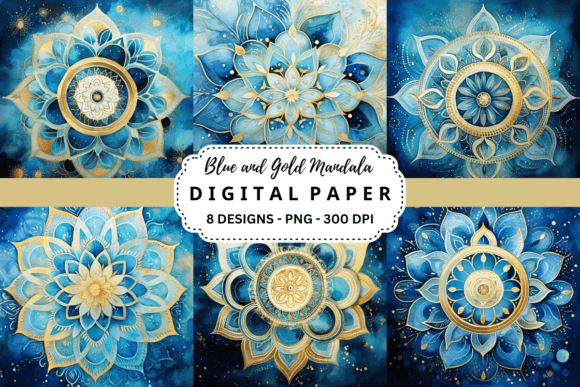
Blue and Gold Mandala Backgrounds: Elevate Your Creative Projects
There's a reason blue and gold never go out of style. This color pairing carries weight—royalty, trust, luxury, calm—all wrapped into one visual package. When you layer that onto mandala patterns, which already symbolize unity, balance, and intricate craftsmanship, you get something genuinely special. Blue and gold mandala backgrounds sit at that intersection of spiritual depth and polished sophistication, making them surprisingly versatile across dozens of project types.
Whether you're designing a social media template for a wellness brand, wrapping paper for a boutique product, or invitation cards for a formal event, these backgrounds do heavy lifting without overwhelming your foreground content. They're decorative without being distracting. That's a hard balance to strike, and it's exactly why so many designers reach for mandala patterns when they need a backdrop that feels intentional rather than generic.
What Makes These Backgrounds Work So Well
Let's talk about the actual visual character here. The blue tones typically range from deep navy to softer cerulean, creating a sense of depth and tranquility. Gold accents—whether metallic, warm amber, or muted ochre—add contrast and a touch of opulence. The mandala geometry itself brings symmetry and repetition, which the human eye naturally finds satisfying. It's pattern recognition at its most appealing.
The collection includes eight individual PNG files, each at 300 DPI and 3600 x 3600 pixels. That resolution matters more than people realize. At 300 DPI, these files hold up beautifully for print projects—think poster design, banner printing, or packaging labels where pixelation would ruin the effect. The square format gives you flexibility too. You can crop into sections for different layouts without losing quality, which is especially useful when you're working across multiple platforms with varying dimension requirements.
What strikes me about blue and gold mandala backgrounds specifically is their dual personality. They read as both calming and celebratory. A yoga studio could use them for class schedules and retreat flyers. A jewelry brand could use the same background for product photography backdrops. That range isn't common with decorative assets, and it's worth appreciating before you start a project.
Where These Backgrounds Truly Shine
Social media is an obvious starting point. Instagram posts, Facebook covers, Pinterest pins—these platforms reward visual richness, and mandala patterns photograph well at every size. If you're a content creator building templates for clients or your own brand, having a set of eight variations means you can maintain visual consistency without repeating the exact same image week after week. Subtle shifts in pattern density or color intensity keep things fresh while staying on-brand.
For entrepreneurs and small business owners, these backgrounds work across branding materials in ways that might surprise you. Restaurant menus, salon appointment cards, boutique shopping bags, event programs—any touchpoint where you want to communicate quality and attention to detail benefits from a mandala backdrop. The blue and gold palette specifically suggests professionalism with personality, which is exactly the impression most service-based businesses want to make.
Print-on-demand designers should pay close attention here. Wrapping paper, throw pillows, phone cases, tote bags—mandala patterns have proven market appeal in the POD space. The high-resolution files mean your printed products won't suffer from the quality issues that plague lower-resolution design assets. When a customer holds a product in their hands, texture and clarity matter. These files deliver on both counts.
Scrapbooking enthusiasts and invitation designers find real value too. Wedding invitations with a blue and gold mandala background feel elegant without being stuffy. Birthday party invitations, baby shower cards, graduation announcements—the pattern adapts to the occasion depending on what you layer on top. Typography choices, photo placement, and accent colors all shift the mood while the mandala provides a reliable foundation.
Working With the Files: Practical Considerations
Since these are PNG files with transparent or patterned backgrounds, layering becomes straightforward. In design software like Photoshop, Illustrator, Canva, or Affinity Designer, you can drop them behind text and images without wrestling with masking or complex clipping paths. That simplicity matters when you're producing content at volume—social media managers and bloggers understand this pressure well.
Think about visual hierarchy when you're placing content over mandala backgrounds. The patterns are inherently detailed, so your foreground elements need sufficient contrast. White or cream text over blue and gold mandalas typically reads well. Bold sans-serif fonts work better than delicate scripts for body text, though a flowing script font for headlines can create a beautiful pairing if the size is large enough. Test your combinations at the actual viewing size—what looks balanced on a large monitor might become muddy on a phone screen.
Color consistency across your project matters too. If you're using these backgrounds as part of a brand identity system, sample the blues and golds from the mandala files and incorporate those exact values into your other design elements. That creates cohesion between your background and your typography, logos, and accent graphics. It's a small step that separates professional-looking work from designs that feel loosely assembled.
Matching Backgrounds to Project Goals
Not every project calls for the same level of visual complexity. For editorial design—magazine layouts, blog headers, digital brochures—a mandala background works best when it's treated as an atmospheric layer rather than a dominant feature. Reduce opacity slightly, or use a cropped section as a decorative border. Let the content breathe.
Packaging design and poster work, on the other hand, can handle more visual intensity. A full-bleed mandala background behind product photography creates drama and shelf appeal. The blue and gold combination photographs well under retail lighting, which is a practical consideration that purely digital designers sometimes overlook.
For personal projects—phone wallpapers, desktop backgrounds, printable art for your home—these files offer immediate gratification. Print one at full resolution, frame it, and you have wall art that looks far more expensive than a digital download. The mandala's meditative quality makes it particularly suited for spaces where you want calm energy: bedrooms, meditation corners, reading nooks.
Getting the Most From Your Investment
Eight files gives you genuine variety. Before starting a project, review all eight and consider which pattern density and color balance suits your specific needs. A tighter, more intricate mandala might work for large-format printing where viewers see it up close. A broader, more open pattern could be better for digital thumbnails where fine detail gets lost at small sizes.
Keep file organization simple but deliberate. Name and sort them by project type or color intensity so you can quickly find the right match during your workflow. When you're under deadline pressure—and who isn't—having your design assets organized saves real time and real frustration.
These blue and gold mandala backgrounds represent a genuinely useful addition to any designer's toolkit. They bridge the gap between decorative and functional, between luxurious and accessible. Whether you're building a brand from scratch, refreshing existing marketing materials, or exploring new creative projects, having quality background assets ready to go removes one obstacle between your idea and its finished form.